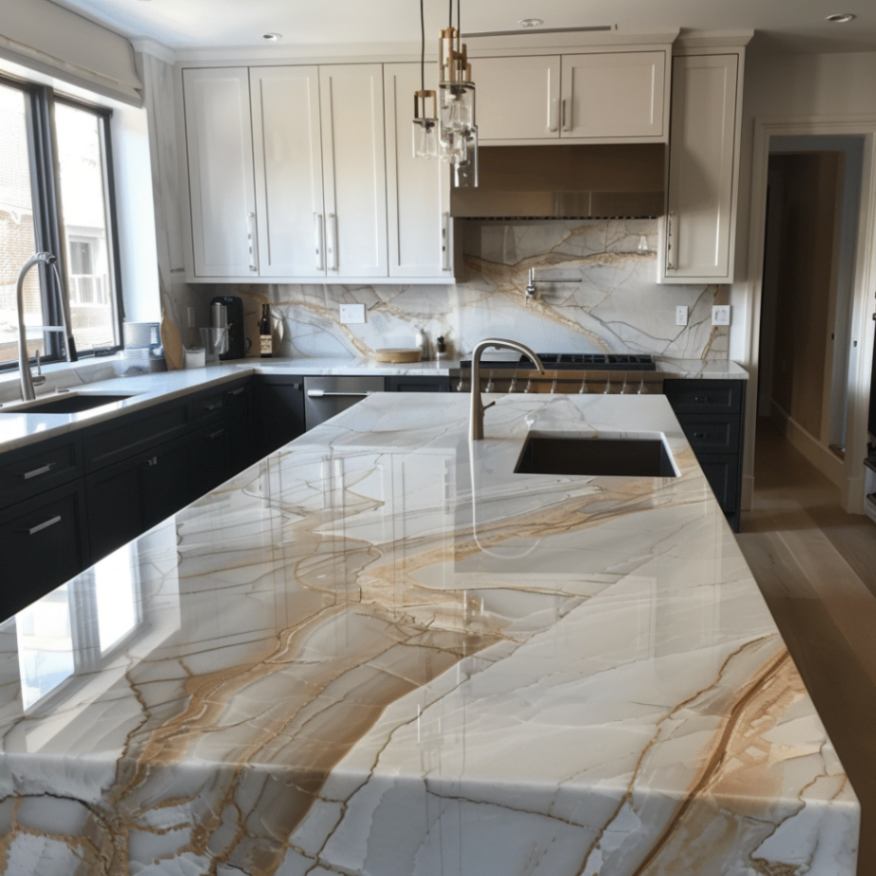
Quartzite is fast becoming a top pick for countertops in homes all around. Known for its strength and stylish appearance, this natural stone is catching the eyes of homeowners and interior designers who are looking to blend functionality with aesthetic appeal in modern kitchens and bathrooms.
The popularity of quartzite is on the rise due to its ability to withstand the daily demands of home activities while maintaining a sleek, attractive look. Its availability in various colors and patterns allows it to fit seamlessly into any design theme, from ultra-modern to classically traditional. This makes quartzite not just a practical choice for kitchen and bathroom surfaces, but also a central feature of home design that adds significant value to any property.
Advantages of Quartzite Stone Countertops
Quartzite countertops are increasingly becoming a popular choice in modern homes for their blend of natural beauty and robust practicality. Here are the key advantages that make quartzite stand out among countertop materials:
Durability and Hardness
Quartzite is renowned for its exceptional durability, which makes it an ideal material for kitchen countertops. As a metamorphic rock formed from sandstone under extreme heat and pressure, quartzite is incredibly hard and dense, making it resistant to scratches and chipping. Its ability to withstand high temperatures also makes it perfect for kitchens where hot pots and pans are a norm. This resilience ensures that quartzite countertops maintain their integrity and appearance over many years of use.
Aesthetic Appeal
One of the most compelling features of quartzite is its striking aesthetic appeal. Each slab of quartzite displays a unique pattern of veining and rich color variations, which can range from subtle earth tones to bold, dramatic hues. This natural artistry makes quartzite a centerpiece in any kitchen or bathroom, enhancing the overall design with its distinctive appearance.
Low Maintenance
Despite its porosity, quartzite is relatively low maintenance compared to other natural stones like marble. When sealed properly, quartzite countertops resist stains and do not harbor bacteria or viruses, which is a crucial feature for kitchen hygiene. Resealing is typically only needed once a year, making it less labor-intensive than other stones that might require more frequent upkeep.
Versatility
Quartzite’s hardness and durability extend its use beyond just countertops. It is also a favored material for bathroom vanities, flooring, and even outdoor applications such as patio surfaces and pool surrounds. This versatility allows homeowners to create a cohesive look throughout their property, connecting indoor and outdoor spaces with the same exotic stone.
Color Variety
Quartzite comes in a wide variety of colors, from whites and grays to more vibrant shades like blues and greens. This extensive palette ensures that there is a quartzite option to suit any kitchen design and personal style preference. Whether you’re looking for a natural muted tone to complement a rustic design or a bright, eye-catching hue to make a statement, quartzite can provide it.
Comparison With Other Countertop Materials
When selecting a countertop surface, homeowners have several popular materials to choose from, each with its own set of advantages. Here’s how quartzite stands up against granite, marble, and engineered quartz:
Quartzite vs. Granite
Cost: Both materials are in the higher price range, but granite can sometimes be slightly less expensive depending on the variety.
Maintenance: Granite requires sealing, similar to quartzite, to prevent staining and bacteria growth.
Longevity: Both are very durable, but quartzite generally has a slight edge in terms of density and resistance to abrasion.
Aesthetic: While granite offers a wide range of colors and patterns, quartzite is often preferred for its natural color consistency and subtle patterns, making it an attractive feature in minimalist or contemporary designs.
Quartzite vs. Marble
Cost: Marble and quartzite are comparably priced, although exotic marble varieties can be more expensive.
Maintenance: Marble is more porous than quartzite, making it more susceptible to staining and etching from acids, which requires more frequent sealing and careful maintenance.
Longevity: Quartzite is harder and more durable than marble, making it better suited for high-traffic areas.
Aesthetic: Both offer stunning natural patterns. Marble is famed for its delicate patterns and luxurious feel, while quartzite provides a similar aesthetic with greater durability.
Quartzite vs. Engineered Quartz
Cost: Engineered quartz can be less expensive than quartzite, especially at the lower end.
Maintenance: Quartz is non-porous and does not require sealing, making it lower maintenance than quartzite.
Longevity: While both are durable, the resin in engineered quartz can discolor over time when exposed to direct sunlight.
Aesthetic: Engineered quartz offers a broader array of color options due to the manufacturing process, but quartzite’s natural veining creates unique, eye-catching patterns that are not replicated in engineered materials.
Why Choose Quartzite?
Despite often having a higher initial cost, quartzite is frequently chosen over other materials for several reasons:
Durability: Its superior hardness makes it less likely to scratch, chip, or crack compared to marble and some granites.
Beauty: Quartzite offers a unique combination of natural veining and a wide range of earthy tones that can elevate the design of any space.
Long-Term Value: The durability and timeless appeal of quartzite can enhance the resale value of a home, making it a wise investment in the long run.
Quartzite’s combination of beauty, durability, and low maintenance needs makes it a standout choice among natural countertop materials, aligning well with the needs of active kitchens while adding a touch of elegance to any home.
Conclusion
Quartzite stone countertops are rapidly becoming a favorite for those looking to combine style with substantial durability in their living spaces. This natural stone’s impressive resistance to daily wear and tear makes it a practical choice for busy kitchens and bathrooms. With its rich array of colors and captivating natural patterns, quartzite not only serves a functional purpose but also enhances the aesthetic appeal of any home.
Opting for quartzite means investing in a countertop that will stand the test of time, both in style and in structure, making it a wise choice for anyone looking to elevate their home’s design while ensuring functionality for years to come.
Frequently Asked Questons
What makes quartzite a highly durable choice for countertops?
Quartzite is extremely tough, formed under high heat and pressure, making it resistant to scratches, chips, and heat—ideal qualities for busy kitchens.
How does quartzite’s aesthetic appeal compare to other natural stones?
Quartzite is known for its rich color variations and unique veining patterns, offering a natural yet sophisticated appearance that enhances any kitchen or bathroom decor.
What type of maintenance does quartzite require?
Quartzite needs sealing once a year to maintain its stain resistance and overall durability, which is less frequently than some other natural stones.
Can quartzite be used for other home applications besides countertops?
Yes, due to its durability and beauty, quartzite is also suitable for bathroom vanities, flooring, and outdoor applications like patios and pool surrounds.
How does the cost of quartzite compare to marble and granite?
Quartzite is generally in the same price range as high-end granite and can be less costly than some types of marble, providing a good balance of cost, durability, and aesthetic appeal.
Why might a homeowner in Denver choose quartzite over engineered quartz?
Homeowners may prefer quartzite over engineered quartz for its superior natural strength, unique patterns, and the added value it brings to the property due to its luxurious appearance and longevity.


