Best Products for Cleaning Granite Countertops
June 16, 2024
Seamless Indoor-Outdoor Kitchen Design Transitions
June 20, 2024
White marble countertops are popular in modern kitchens due to their timeless beauty. However, picking the right slab requires some careful thought. There are many factors to consider, like veining patterns and finishes, which can make the selection tricky. This article provides tips on what to look for when choosing a slab for your kitchen. By understanding the different types of white marble countertop slabs and how to choose the right pattern and finish, you can find a countertop that fits your style and will last for many years.
Stick with White Marble
White marble is often preferred for kitchen countertops because it shows less wear from acid etching than colored marble. Acid etching leaves white marks on darker stone, which can be very noticeable. Classic Italian white marbles like Calacatta and Statuario are known for their high quality. However, Vermont Danby and Colorado Yule marbles are also good choices. They have the same durable characteristics and natural beauty as Italian marble. While colored marble can add a unique look, it’s usually better to stick with white marble for kitchen surfaces to keep them looking clean and fresh.
Artful Slab Selection and Vein Matching
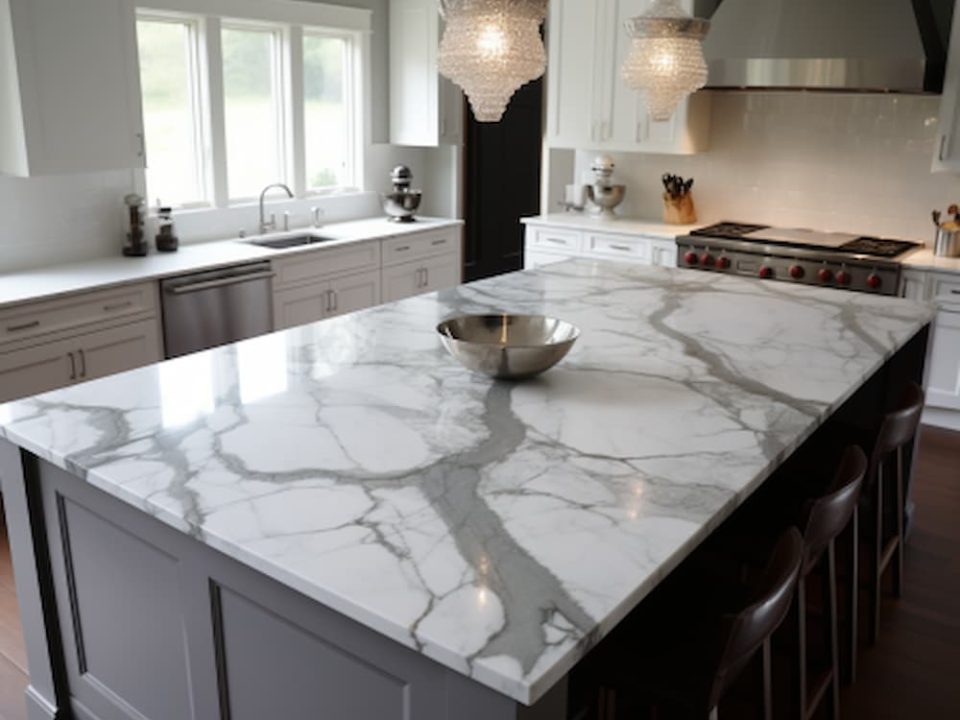
When picking slabs for your countertops, consider how different pieces will fit together. Each slab of marble is unique, with its own veins and patterns. The best countertops have pieces that align to create a cohesive look. Book-matching is one method to achieve this. With book-matching, adjacent pieces are placed so that their veins mirror each other, creating a consistent pattern.
Long slabs without seams are ideal because they give a clean and uninterrupted appearance. If seams are needed, ensure the slabs are matched to blend the veins as smoothly as possible. This helps avoid a disjointed look and makes the countertop feel like one solid piece.
Choosing the right pattern for your slabs is also important. Veins can be delicate and thin, or bold and thick. Decide which look will complement your kitchen’s design. Some prefer a striking appearance, while others favor a subtle pattern that blends with the overall decor.
Understanding Veining Patterns
Marble blocks can be cut in two ways to create different patterns. Cross-cut marble, also known as fleuri cut, results in open, random patterns resembling flowers. This cut is best for book-matching, as the slabs fit together well.
Vein-cut, or striato, produces slabs with straight, linear veins. This cut is ideal if you prefer consistent lines or want a striped look for walls. Both cross-cut and vein-cut can create beautiful countertops, but each brings a unique aesthetic.
Designers often mix these patterns for interesting effects, using vein-cut on walls and cross-cut on floors. Consider your space and how the patterns can complement it. Think about where the veining will show up on your countertops and how it will align.
Finish Options
Modern technology has brought many new finishes to stone surfaces. Leather, brushed, and river-wash finishes offer various textures that can add character to your marble countertop. However, most homeowners stick to polished or honed finishes.
Polished finishes are glossy and give a countertop a shiny look. Honed finishes are matte and dull, creating a softer appearance. If you’re worried about etching or scratching, honed is often a better choice. Acid etching is more noticeable on polished finishes because it dulls the surface. New brushing and polishing techniques offer more ways to customize your countertop’s look. Decide if you prefer a sleek, glossy finish or a more muted, textured surface.
Curving the Edges
Marble is known for its ability to be easily carved, which makes it ideal for creating curved edges. With modern CNC machines, many profiles can be achieved. Simple eased edges are common because they take the sharpness off a 90-degree angle.
Bull’s nose edges are rounded into a half-circle, which makes them resistant to chipping. Curved edges also add an elegant and timeless appearance to the countertop. Square corners may be prone to chips if something hard hits them. Curved edges, like bull’s nose, protect the countertop from damage and provide a softer look.
Other Considerations
Before choosing a white marble countertop slab, consider the cost, maintenance, and durability. Marble is more porous than some other stones, meaning it can stain if not sealed properly. Regular cleaning and sealing are needed to keep it in good shape.
Marble is also softer than granite and can scratch easily, so use cutting boards and avoid dragging heavy pots across it. Clean up acidic spills quickly to prevent etching.
For extra peace of mind, consult a stone specialist who can offer advice on the best types of marble for your kitchen. Some varieties are more durable and stain-resistant than others, and knowing these differences can help you make an informed choice.
Final Thoughts
Choosing a white marble countertop slab requires careful thought. Stick with white marble for its timeless beauty and practical resistance to stains. Select slabs with care, considering veining patterns and matching seams. Explore different finishes and edge profiles to find the perfect look. While marble needs regular care, it remains a popular choice for kitchen countertops. By following these tips, you’ll have a beautiful countertop that fits your style and lasts for years.