6 Tips for Blending Custom Granite Countertops
May 10, 2024
Stone Countertop Material Aesthetics: A Comparison
May 15, 2024
Marble countertops are beautiful but require proper care to maintain their appearance. Over time, scratches, stains, and dull spots may appear due to daily use. Marble countertop restoration can help bring them back to life, removing imperfections and restoring shine. Restoring marble countertops can be done independently or with professional help. This process protects your investment and helps keep your kitchen elegant. In this article, we’ll discuss how to inspect, clean, repair, and seal your marble surface so that it looks its best. Following these steps will help you maintain the unique beauty and value of marble countertops.
Understanding Marble Countertops
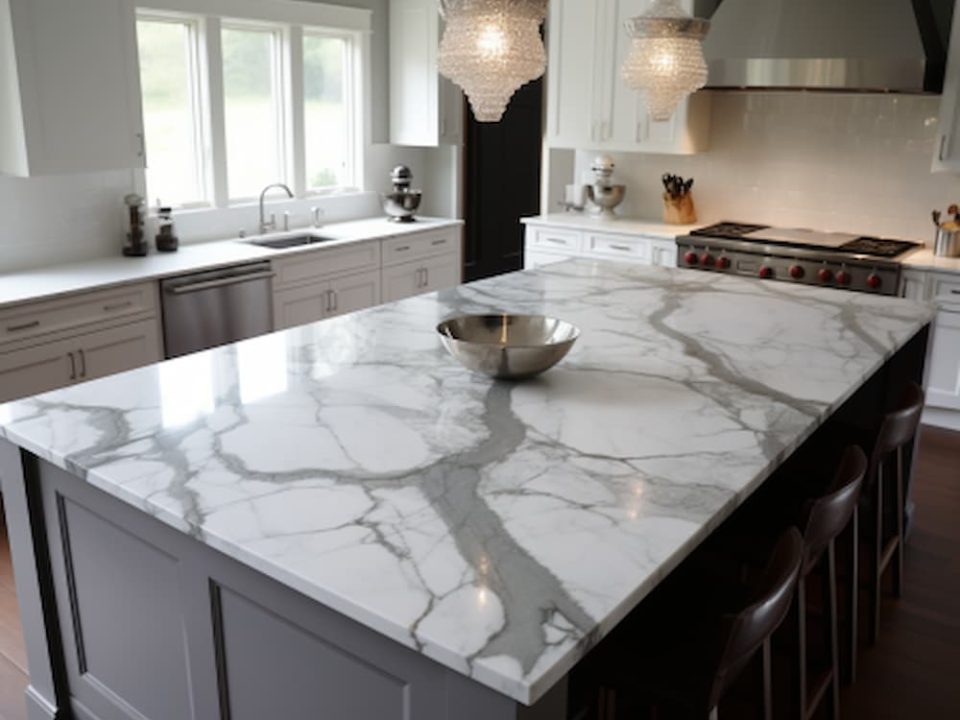
Marble is a natural stone formed from limestone under heat and pressure. This process gives it a unique look, often with veins and patterns. The most common types are Carrara, Calacatta, and Statuario marble, which have different colors and designs.
Marble countertops are popular for their elegance, but marble is softer than other stones and easily damaged. Common issues include stains from spilled liquids, dull spots from acidic foods, and scratches from sharp objects. Knowing these problems helps us understand why restoring marble countertops is important and how to choose the right restoration steps.
Preparation for Marble Countertop Restoration
Before restoring your marble countertop, it’s essential to have the right tools. You’ll need diamond polishing pads, microfiber cloths, pH-neutral cleaners, and a sealant. Wear safety gear like gloves and a mask, and ensure good ventilation while working.
Begin by inspecting your countertop for the type and extent of damage. Are there stains, dull spots, or scratches? Determine if the damage is deep or shallow to pick the right tools and restoration method. Cover nearby surfaces with tape or plastic sheets to protect them during the restoration process. Start by cleaning the countertop using a soft cloth and pH-neutral cleaner. Gently wipe off dirt and debris before moving on to more specific restoration steps.
Marble Countertop Cleaning Process
Before cleaning your marble countertop, protect nearby surfaces with tape or cloth. Remove dust and debris with a vacuum or brush before washing.
To clean, use a soft cloth and a pH-neutral cleaner. Avoid acidic cleaners because they can damage the marble. Apply the cleaner in circular motions to remove dirt and stains. Be gentle to avoid scratching. Rinse with clean water and dry thoroughly with a soft cloth. Proper cleaning ensures that the countertop is ready for the next steps in the restoration process, like honing and polishing.
Marble Countertop Honing and Polishing
Honing and polishing improve the appearance of your marble countertop, making it smooth and shiny.
Honing Process:
- Removes minor scratches and dull spots from the surface.
- Start with low-grit diamond polishing pads and work in a circular motion to sand down imperfections.
- Progress to higher-grit pads for a smoother finish.
- Rinse the surface after each grit change to remove dust.
Polishing Process:
- Creates a high-gloss finish after honing.
- Apply polishing paste to the surface using higher-grit diamond pads.
- Work in a circular motion across the countertop for even coverage.
- For deeper scratches, use a buffer with a polishing compound.
Polishing Paste and Diamond Pads:
- Polishing paste with diamond pads can repair deeper scratches and restore the shine.
- Start with lower-grit pads and gradually move to higher grits to achieve the desired finish.
- Follow the manufacturer’s instructions for optimal results.
Both honing and polishing require patience and precision, but the results are worth the effort. Your marble countertop will regain its natural beauty and shine.
Addressing Specific Marble Countertop Issues
Over time, marble countertops can develop specific issues requiring careful handling.
Removing Stains
Marble stains are often caused by spills left on the surface for too long. To remove them, create a poultice using a mixture of baking soda and water or hydrogen peroxide. Apply this thick paste to the stained area and cover it with plastic wrap, sealing the edges with tape. Leave it to sit for 24 hours so it can draw out the stain. Rinse off the poultice with water and gently dry the area with a soft cloth. Repeat if necessary.
Repairing Deep Scratches and Chips
Deep scratches and chips can be tricky to fix without professional help, but it’s possible to do it yourself. For chips, fill the area with clear epoxy, using a putty knife to smooth it over. Once dry, sand it down with fine-grit sandpaper until it’s flush with the countertop. For deep scratches, start with a low-grit diamond pad and gradually move to higher grits to buff the area until it’s level. Finish with polishing pads to restore the shine.
Restoring Acid-Etched Surfaces
Acidic substances like lemon juice, vinegar, and tomatoes can leave dull spots on marble surfaces, known as etching. To repair etched spots, clean the area thoroughly. Start with a low-grit pad to gently remove the etching, then gradually move to higher-grit pads to blend the area with the surrounding surface. Finally, polish the surface using a polishing compound and soft cloth to bring back the glossy finish.
Professional vs. DIY Marble Countertop Restoration
Some marble countertop problems may require professional help. Deep stains, wide cracks, and heavy etching can be challenging for a DIY approach. Professionals have specialized tools and experience to deliver the best results.
For minor scratches, stains, and dull spots, you can save money by fixing them yourself. Cleaning, polishing, and sealing are achievable with the right tools and methods. Always assess the damage before deciding whether to do it yourself or hire an expert.
Final Thoughts
Marble countertop restoration can revive your kitchen’s beauty. Cleaning, honing, polishing, and sealing will remove stains and scratches while adding a protective barrier. Some issues may require professional help, but DIY restoration is often possible with the right tools. Regular maintenance and care can prevent damage and keep your marble countertop looking like new. By following these steps, your marble countertop will remain a beautiful and valuable feature in your home.