Choosing the Right Finish Finishes for Quartzite Bathroom Counters
June 2, 2024
Elusive Beauty and Challenges of Choosing a Perfect White Marble Countertop
June 6, 2024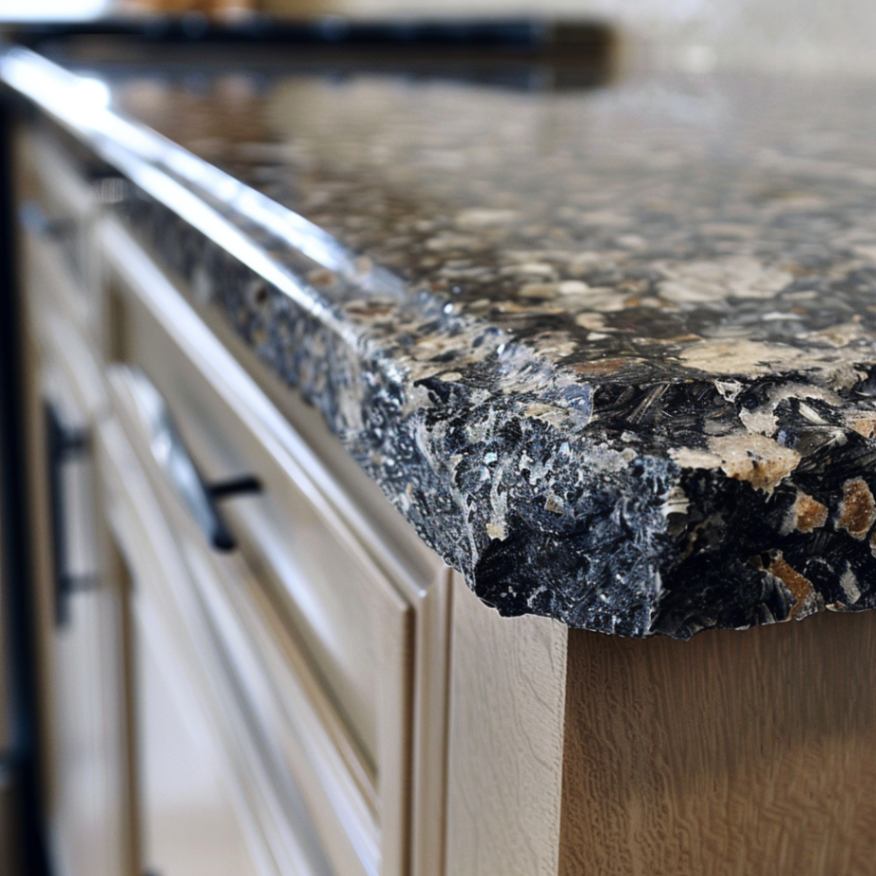
Fix chips and cracks on your granite countertop easily. Assess for damage, gather materials. Clean with mild detergent. Use matching repair kit for chips. For cracks, fill with epoxy slightly above surface. Sand excess when dry. Seal with granite sealer for protection. Polish to maintain shine. You can make your granite countertop look new again.
Assessing the Damage
How can you determine the extent of the damage to your granite countertop? Start by inspecting the surface for any visible cracks, chips, or stains. Run your fingers along the edges to feel for any rough spots or unevenness. Use a flashlight to check for any hidden damages that might not be immediately noticeable.
Sometimes, discoloration or dullness can indicate underlying issues that need to be addressed. Pay close attention to areas near the sink or stove, as these are more prone to damage. By thoroughly examining your countertop, you can accurately assess the level of damage and plan the necessary repairs to keep your granite looking its best.
Gathering Materials and Tools
To prepare for maintaining your granite countertop, gather the necessary materials and tools for the task. You will need items such as fine-grit sandpaper, a soft cloth, granite cleaner or mild dish soap, a putty knife, and granite sealer. Fine-grit sandpaper is essential for smoothing out any rough edges on the countertop.
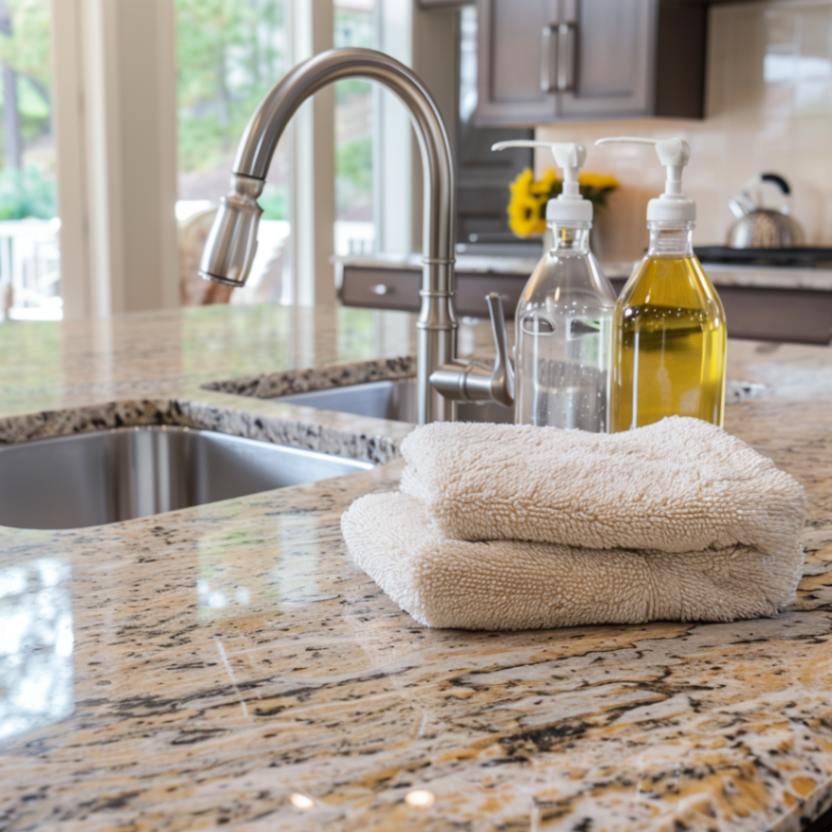
A soft cloth will help you clean the surface of the countertop effectively. Granite cleaner or mild dish soap will be used to ensure the area is clean before repairing any chips or cracks. A putty knife is necessary for applying filler material to the damaged areas. Lastly, a granite sealer will help protect your countertop from future damage and keep it looking its best.
Repairing Small Chips
Inspect the granite countertop for any small chips that may require repair. Small chips are common in granite countertops and can be easily fixed with the right materials. Begin by cleaning the damaged area with a mild detergent and water, ensuring it is dry before proceeding. Use a granite chip repair kit that matches the color of your countertop for best results.
Apply the epoxy or resin filler to the chip, slightly overfilling it to ensure complete coverage. Let it dry according to the manufacturer’s instructions, then gently sand the excess filler down until it is smooth and level with the countertop surface. With this simple process, your granite countertop will look as good as new in no time.
Filling and Blending Cracks
Examine your granite countertop closely for any cracks that need filling and blending to maintain its appearance and structural integrity. To fill cracks, start by cleaning the area with a granite cleaner and letting it dry completely. Use an epoxy adhesive specifically designed for stone to fill the crack, ensuring it’s slightly overfilled.
Once dry, gently sand down the excess epoxy using fine-grit sandpaper to blend it seamlessly with the countertop surface. For best results, match the epoxy color as closely as possible to your granite. This process not only restores the aesthetics of your countertop but also prevents the crack from worsening and maintains the overall durability of the granite.
Sealing and Polishing Surface
Consider applying a high-quality granite sealer to protect and enhance the surface of your countertop. A granite sealer helps prevent stains and keeps your countertop looking pristine. Before sealing, ensure your countertop is clean and dry. Apply the sealer evenly using a soft cloth, following the manufacturer’s instructions.
Once the sealer has dried, buff the surface with a clean, dry cloth to remove any excess product. Additionally, periodic polishing can help maintain the luster of your granite countertop. Use a granite polish specifically designed for natural stone surfaces. Apply the polish in a circular motion, then buff the countertop to a shine. Regular sealing and polishing will keep your granite countertop looking beautiful for years to come.
Conclusion
Maintaining your granite countertop doesn’t have to be a daunting task. By assessing the damage, gathering the necessary materials, and following simple repair steps, you can easily fix chips and cracks. With a little effort, you can restore your countertop to its original beauty. Remember to seal and polish the surface to protect it from future damage and keep it looking pristine for years to come.
Frequently Asked Questions
How can I prevent damage to my granite countertops in daily use?
Proper care, such as using cutting boards and avoiding placing hot items directly on the surface, can prevent damage. Regular cleaning with a soft cloth and a mild detergent will help maintain the surface material and avoid issues like water spots and stains.
What should I do if I notice a chip in my granite countertop?
For small chips, you can use a repair kit that matches the color of your granite. Clean the area, apply the epoxy from the kit, and once it’s dry, sand it down to level it with the rest of the countertop.
Can Denver Stone Plus help with deep cracks in my granite counters?
Yes, our experienced professionals can fill cracks with a matching epoxy adhesive to restore the appearance and integrity of your granite counters. We recommend contacting a stone care professional from our team for severe damage.
How often should I seal my granite countertop?
It is generally recommended to seal granite countertops once a year, but this can vary based on the usage and the type of granite. Darker color granite, like black granite, may require less frequent sealing compared to lighter colors like white granite countertops.
What are the best products to use for cleaning granite countertops to avoid damage?
Use pH-neutral cleaners to prevent etching or damage to the sealer. Avoid acidic liquids and harsh chemicals that can etch the surface and degrade the sealer over time.
How does Denver Stone Plus recommend handling water-based stains on granite?
To handle water-based stains, blot up spills immediately to prevent the stain from setting in. For persistent water-based stains, a mixture of baking soda and water can be applied to the area, left to sit, and then gently wiped away.