Innovating Designs with Stone Counter Remnants
May 29, 2024
Choosing the Right Finish Finishes for Quartzite Bathroom Counters
June 2, 2024
The bathroom has become a sanctuary of relaxation and self-care in today’s modern home. One key element that elevates the bathroom experience is the countertop. Quartz bathroom countertops have become increasingly popular due to their combination of stunning aesthetics and exceptional functionality.
Technological advancements have played a major role in the evolution of quartz. Manufacturing processes have become more sophisticated, allowing for a wider range of colors, patterns, and finishes than ever before. This makes it easy to find quartz bathroom countertops that complement any design style, from sleek and modern to warm and inviting.
Importance of Quartz Bathroom Countertops Design
Quartz bathroom countertops are highly favored in today’s bathroom designs due to their resilience and versatile appearance. As a material, quartz stands up well against moisture and wear, making it ideal for the humid and busy environment of a bathroom. Its wide range of colors and patterns allows homeowners to match their countertops with various interior styles, from minimalist to luxurious. This adaptability makes quartz a top choice for both new constructions and renovations.
Quartz’s Evolution with Technological Advancements
The journey of quartz from a simple, natural stone to a sophisticated, engineered countertop material is a testament to human ingenuity. Technological advancements have played a pivotal role in transforming quartz fabrication, making it more accessible and appealing for bathroom use. Early processes were limited to basic cutting and polishing, but today’s techniques involve precise engineering and digital technology to produce countertops that are consistent in quality and customizable in design.
Innovations in manufacturing have also introduced improvements in texture and color options, allowing for the replication of luxurious stone patterns at a fraction of the cost. These advancements have not only made quartz more functional but also more environmentally friendly, aligning with modern values of sustainability.
Engineered Quartz Process
The production of engineered quartz countertops begins with combining ground natural quartz with polymer resins and pigments. This mixture is then poured into molds, where it is compressed under intense pressure and heated to form solid slabs. This process, known as vibrocompression vacuuming, ensures that the final product is non-porous and hard, which is ideal for bathroom vanities and other surfaces exposed to frequent use and moisture.
Comparison with Natural Stone in Terms of Consistency and Versatility
Unlike natural stone, which can vary significantly in color and pattern due to its natural formation process, engineered quartz offers a high level of consistency. This consistency ensures that products like white quartz countertops maintain uniformity across large areas or multiple bathroom vanities, crucial for achieving a clean design in transitional spaces. Moreover, engineered quartz can mimic the look of natural stone while providing greater versatility in design and color, meeting a wide range of design styles from traditional to modern.
Technological Advancements in Quartz Design and Fabrication
Precision Engineering Using CAD for Custom Designs
Computer-Aided Design (CAD) software has revolutionized the fabrication of quartz countertops by allowing for precise and intricate designs tailored to specific bathroom spaces or design styles. CAD enables manufacturers to plan and execute complex cuts and fits that would be difficult or impossible to achieve manually, ensuring each quartz piece perfectly matches the layout and aesthetics of a master bathroom or customized project.
Role of High-Precision Tools in Enhancing Quartz Quality and Aesthetics
The use of high-precision tools, such as CNC routers and waterjet machines, in quartz production has dramatically improved both the quality and the visual appeal of quartz surfaces. These tools execute the designs created with CAD software with high accuracy, ensuring that every edge, curve, and cutout of bathroom necessities fits flawlessly into place. The precise cutting reduces waste and allows for the creation of intricate details and finishes that contribute to a bathroom’s overall clean and refined look.
Techniques for Creating Diverse Color Palettes
The development of color palettes in engineered stone countertops has expanded greatly, providing designers with a broad array of options to align with any design aesthetic. Here’s how diverse color options are achieved:
Pigment Integration: Manufacturers incorporate high-quality pigments into the quartz mixture before curing, allowing for the production of countertops in eye-catching colors that can serve as focal points or complement existing decor.
Layering Techniques: By layering different colors and materials during the manufacturing process, producers can create complex and unique visual effects that add depth and character to the countertop design.
Custom Blends: For custom quartz designs, specific pigment blends can be created to match the exact shade required by a homeowner or designer, making each piece both functional and artistically aligned with the intended space.
Technologies Behind Mimicking Natural Stone Textures
Replicating the beauty of stone textures in quartz involves sophisticated technology that allows for the creation of surfaces that closely resemble natural stone:
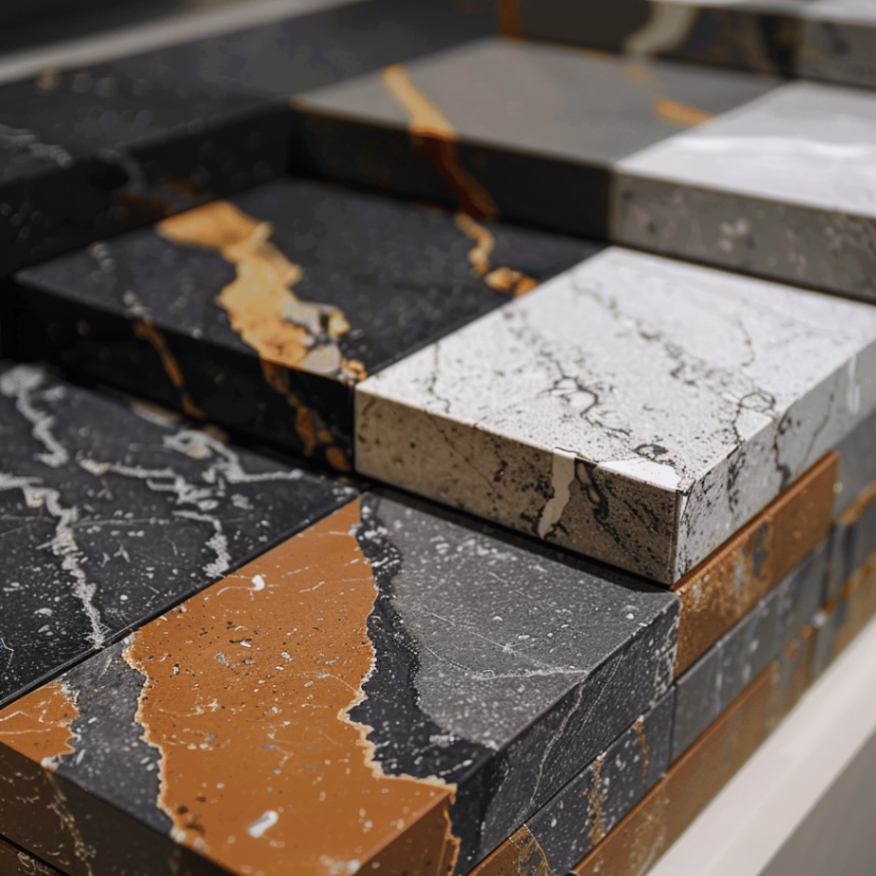
Photographic Technology: High-resolution photographs of actual stone are used to create detailed patterns that mimic natural stone. These images are then printed onto the quartz surface, capturing the subtle nuances and bold veining of materials like marble and granite.
Physical and Chemical Techniques: Physical pressing techniques create textures on the quartz surface that feel similar to natural stone. Additionally, chemical treatments can alter the surface to mimic the porous aspects of natural stones such as limestone.
3D Printing Technology: Advanced 3D printing is used to apply texture directly onto the quartz surface, allowing for raised patterns and dimensional effects that enhance the tactile and visual mimicry of natural stone.
Conclusion
The journey of quartz in the world of bathroom design is a story of continuous improvement and innovation. From its early days as a simple stone to its current status as a cornerstone in modern bathroom architecture, quartz has proven its value repeatedly. The sophistication of engineered quartz production techniques ensures that these countertops are not only visually appealing but also exceptionally practical for everyday use. With the ability to customize designs through advanced CAD technology and high-precision tools, quartz adapts seamlessly to various bathroom themes, from the most straightforward designs to the most intricate.
Frequently Asked Questions
What makes quartz countertops a good choice for bathrooms?
Quartz is excellent for bathrooms because it resists moisture well and is easy to maintain. Its variety in colors and patterns lets homeowners match the decor of any bathroom style.
How does the precision of CAD technology improve the installation of custom quartz bathroom countertops?
CAD (Computer-Aided Design) software helps in designing countertops that fit perfectly in the specific dimensions and style of a bathroom. This technology allows for accurate cuts and customized designs, ensuring a perfect fit for complex bathroom layouts.
Can Denver Stone Plus replicate the look of natural stone with quartz countertops?
Yes, Denver Stone Plus can replicate the look of natural stone such as marble and granite using advanced photographic technologies and physical techniques. This includes using high-resolution images and special texturing methods to mimic natural stone patterns and textures.
What advancements in manufacturing help create a wider range of quartz colors and textures?
Modern manufacturing advancements allow for the integration of high-quality pigments and layering techniques during the quartz production process. This results in a broad spectrum of colors and unique visual effects, expanding design options for homeowners.
How do high-precision tools enhance the quality and aesthetics of quartz countertops?
The use of CNC routers and waterjet machines in quartz production ensures precise execution of designs, which enhances both the visual appeal and the functional quality of the countertops. These tools help achieve intricate details and perfect edging, contributing to a refined final product.
What are the benefits of choosing quartz over other natural stone materials for my bathroom remodel?
Quartz offers greater consistency in color and pattern than natural stones, which can vary widely. It also doesn’t require the frequent sealing that materials like granite and marble do, making it a more practical and lower-maintenance option for busy bathrooms.