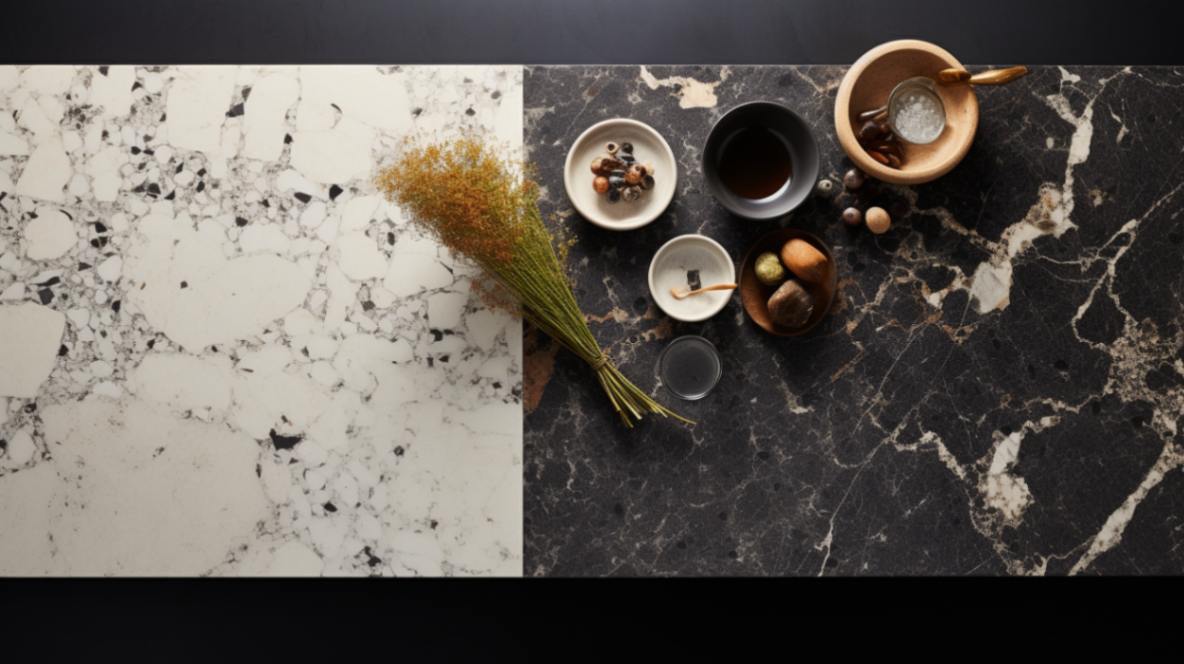
As you stand at the crossroads of kitchen design, the countertop debate between marble vs quartz takes center stage. Both revered building materials, quartz counters and marble slabs bring unique characteristics to the realm of kitchen countertops and bathroom countertops. In this exploration, we unravel the nuances of this countertop duel, delving into the distinct qualities that set quartz and marble apart.
Whether you’re envisioning the sleek modernity of quartz slabs or the timeless elegance of a slab of marble, the choice becomes a defining element of your space. Join us on this journey as we navigate the intricacies of these high-quality materials, helping you make an informed decision in the quest for the perfect kitchen and bathroom surfaces. From the versatility of quartz counters to the natural allure of marble counters, each holds its own in the spectrum of possibilities for your home.
Durability and Longevity
If you’re considering marble and quartz for your countertops, understanding their durability and longevity is crucial. When it comes to resistance to stains, quartz takes the lead. Its non-porous surface prevents liquids from seeping in and leaving permanent marks. Unlike marble, which can be prone to staining, quartz countertops are highly resistant and easier to maintain.
Additionally, when it comes to scratch resistance, quartz countertops also have an advantage. Quartz is engineered to be more durable and resistant to scratches than marble. While marble can be scratched by sharp objects or heavy kitchen utensils, quartz is less susceptible to such damage. This scratch resistance adds to the overall durability of quartz countertops, making them a practical choice for busy kitchens where the risk of scratches is higher.
It can withstand high temperatures without cracking or discoloration. Quartz, however, is not as heat resistant and can be damaged by excessive heat. So, if you love to cook and frequently use hot pots and pans directly on your countertops, marble might be the better choice for you. Consider your lifestyle and needs when making your decision between marble and quartz for your countertops.
Maintenance and Cleaning
When it comes to maintaining and cleaning your countertops, both marble and quartz have their own considerations and requirements. For marble countertops, it is important to avoid using chemical cleaners that contain acids or abrasive substances as they can damage the surface. Instead, opt for natural cleaning methods such as using a mild soap and warm water solution or a mixture of baking soda and water for tougher stains. Regular sealing is also necessary to protect the porous nature of marble and prevent staining.
Quartz countertops are engineered to be more resistant to stains due to their non-porous surface. This stain resistance makes them easier to maintain, as spills and liquids are less likely to penetrate and cause lasting damage. Cleaning quartz countertops is generally straightforward, requiring only a mild soap and water solution. The inherent stain resistance of quartz eliminates the need for regular sealing, simplifying the maintenance process and providing an added advantage over materials like marble.
On the other hand, quartz countertops are more resistant to stains and scratches, making them easier to maintain. They can be cleaned using mild soap and warm water or non-abrasive household cleaners. However, it is still important to avoid using harsh chemicals or abrasive pads to preserve their shine and longevity.
Aesthetics and Design Options
To make your countertop decision, consider the wide range of design options available in both marble and quartz. When it comes to color options, marble offers a beautiful array of natural hues, including white, gray, black, and even some rare and exotic colors. Quartz, on the other hand, provides a wider range of color options, as it is manufactured and can be customized to match any desired shade. Additionally, when evaluating stain resistance, quartz countertops have a notable advantage due to their non-porous nature. Unlike marble, which may be susceptible to staining, quartz offers enhanced stain resistance, making it a practical choice for those who prioritize ease of maintenance and longevity in their countertop selection.
In terms of edge profiles, both marble and quartz countertops offer various choices to suit your aesthetic preferences. From simple straight edges to more intricate designs like beveled or bullnose edges, you can find the perfect edge profile to complement your overall kitchen or bathroom design. Ultimately, both marble and quartz offer a wide array of design options, allowing you to create a stunning and personalized countertop for your space.
Cost and Budget Considerations
Considering your budget, it is important to factor in the cost of marble and quartz countertops. When it comes to affordability, quartz tends to be more budget-friendly than marble. Quartz countertops are manufactured by combining crushed quartz with resin, making them a more cost-effective option compared to natural marble. This price consideration is crucial, especially for those looking for a beautiful and durable countertop solution without exceeding their budget. If cost is a significant factor in your decision-making process, quartz may present a more economical choice while still providing the aesthetic appeal and durability you desire in a countertop material.
Additionally, quartz countertops offer a wide range of material options, allowing you to choose from various colors, patterns, and finishes that can mimic the look of natural stone. On the other hand, marble countertops are known for their luxurious and timeless appeal but can be more expensive due to their natural formation. It is essential to weigh the cost and material options of both marble and quartz countertops to find the best fit for your budget and style preferences.
Environmental Impact and Sustainability
For those concerned about the environmental impact and sustainability of their countertop choice, it’s important to evaluate the eco-friendliness of marble and quartz. When it comes to recycling options, quartz is the more sustainable choice. Unlike marble, which cannot be recycled due to its porous nature, quartz can be crushed and used as a base material for new countertops.
This reduces waste and minimizes the need for new raw materials. Additionally, quartz countertops have a lower carbon footprint compared to marble. The manufacturing process of quartz requires less energy and emits fewer greenhouse gases. This makes quartz a greener option for those looking to minimize their environmental impact. So, if sustainability is a priority for you, quartz countertops may be the better choice.
Final Thoughts
When it comes to choosing between marble and quartz countertops, it ultimately depends on your specific needs and preferences. If you prioritize durability and low maintenance, quartz may be the better option. However, if you value the natural beauty and unique veining of marble, it can add a touch of elegance to your space. Consider your budget, cleaning habits, and environmental concerns before making your decision.


